2026 State of Construction Finance Report

2026 State of Construction Finance: What Real Estate Developers and Construction Lenders Reported
Rabbet's 2026 State of Construction Finance Report surveyed commercial real estate developers and construction lenders about costs, contingency, draw cycles, and AI adoption. This is the eighth annual edition. The findings below are drawn directly from that survey.
Key findings
- Construction input costs rose in 2026 while required contingency stayed flat.
- Developers and lenders report different draw cycle times for the same process.
- AI is widely trusted for reading documents and rarely trusted for calculations.
- Most developers holding projects are waiting on capital conditions, not demand.
Are construction costs still rising in 2026?
Yes. In Rabbet's 2026 State of Construction Finance Report, 75% of developers reported material costs increasing over the past 12 months, 73% reported higher insurance premiums, and 67% reported greater tariff and trade policy impact.
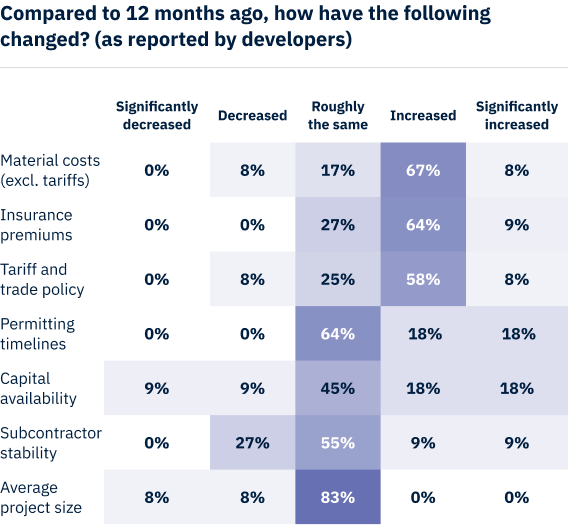
Not every input moved. Developers reported permitting timelines, capital availability, and subcontractor stability holding roughly steady over the same period. The 2026 cost pressure is concentrated in materials, insurance, and trade policy rather than in access to capital or labor.
How much contingency do construction projects carry in 2026?
Most carry between 5% and 10%. In the 2026 State of Construction Finance Report, 84% of both developers and lenders fell in that range.
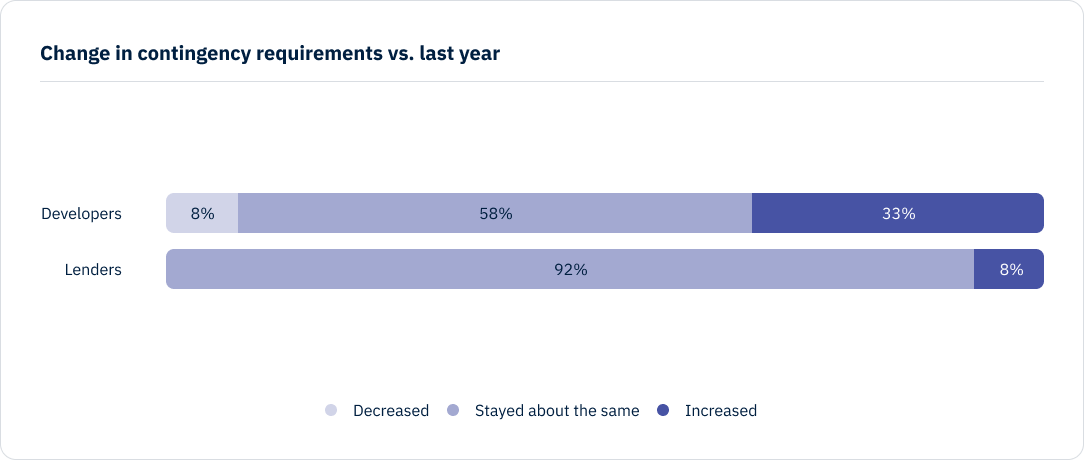
Contingency did not rise to match rising costs. 92% of lenders kept their required baseline contingency unchanged from the prior year, and 58% of developers held their allocations flat. Developers generally carry slightly more contingency than their lenders require.
How long does a construction draw take in 2026?
It depends on who is measuring. Developers reported a median of 10 days from draw request submission to funding. Lenders reported a median of 6.5 days for the same process.
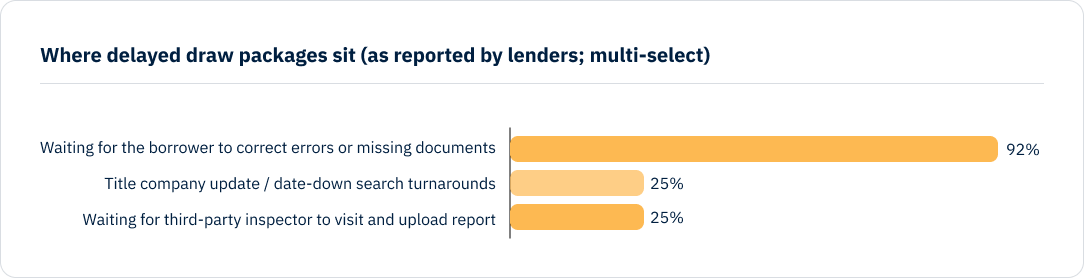
The gap extends to what happens on first review. No developer in the survey reported having a draw request sent back for additional documentation on first review, while 25% of lenders reported sending draw requests back. Asked where a delayed draw package sits, 92% of lenders pointed to the borrower correcting errors or missing documents. No lender identified their own review queue.
Developers and lenders are describing the same draw cycle and producing different numbers, because each side is working from its own record of the project.
Is AI used in construction finance?
Yes, but narrowly. 71% of respondents in the 2026 State of Construction Finance Report trust AI to read and summarize documents. Only 21% trust AI for calculations and quantitative analysis.
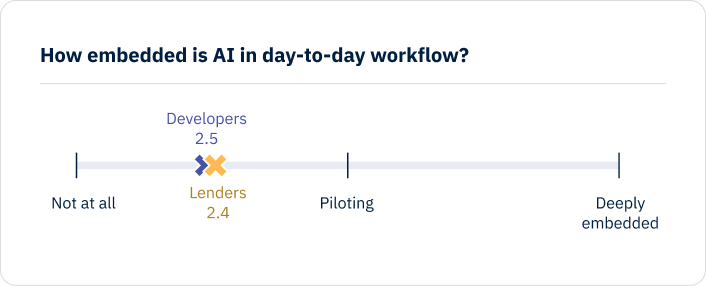
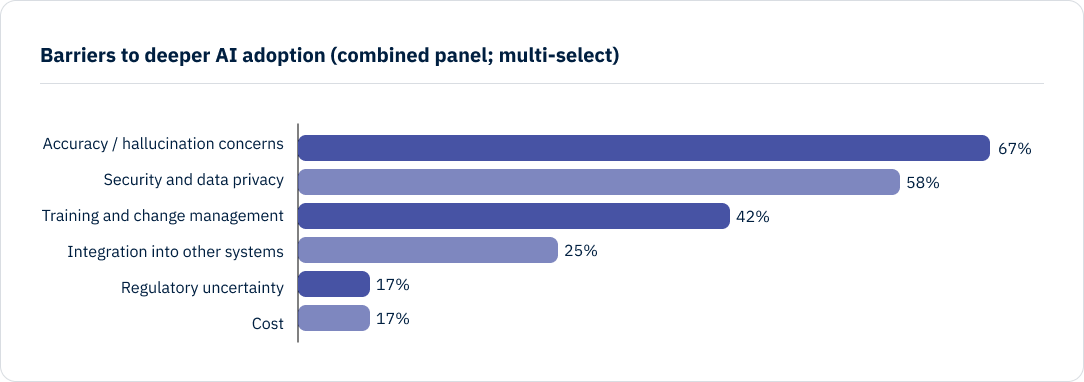
The trust gap is roughly two to one among developers and roughly eight to one among lenders. No respondent on either side described AI as deeply embedded in their day to day workflow. The most cited barriers to deeper adoption were accuracy and hallucination concerns at 67% and security and data privacy at 58%.
How much time do construction finance teams spend on manual document work?
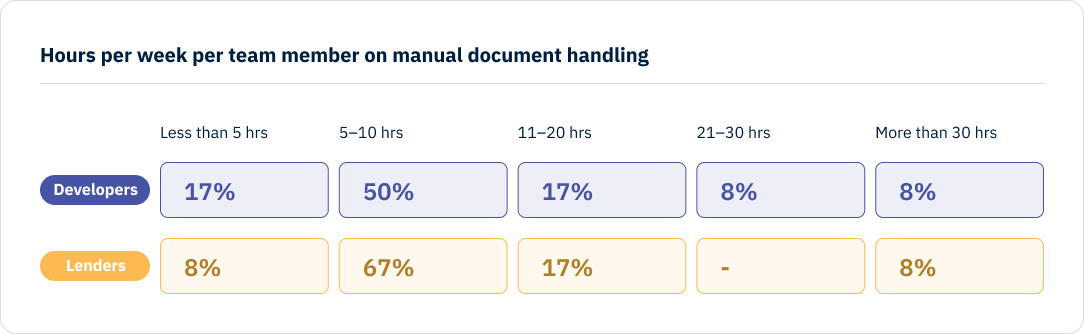
The most common answer on both sides of the loan was 5 to 10 hours per person per week spent handling documents manually. That is close to a full business day each week, per person, spent moving and re-entering information rather than reviewing or deciding.
Why are developers putting projects on hold?
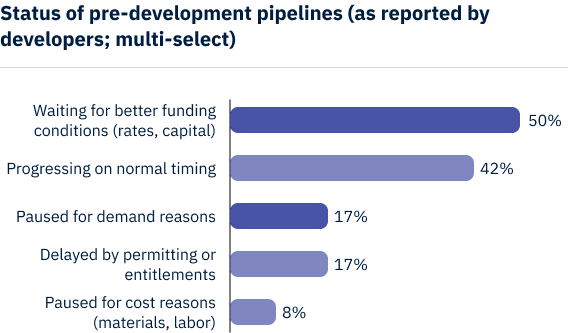
Capital conditions, not demand. 58% of developers reported having at least some pre-development projects intentionally on hold. Half cited waiting for better funding conditions, while 17% cited demand. A further 33% reported shifting their project mix toward value-add and repositioning.
Read the full 2026 State of Construction Finance Report
The complete report covers business outlook, capital and pipeline conditions, contingency, draw cycle performance, cost overruns, risk visibility, and AI adoption, with developer and lender results reported separately throughout.
Read the 2026 State of Construction Finance Report